

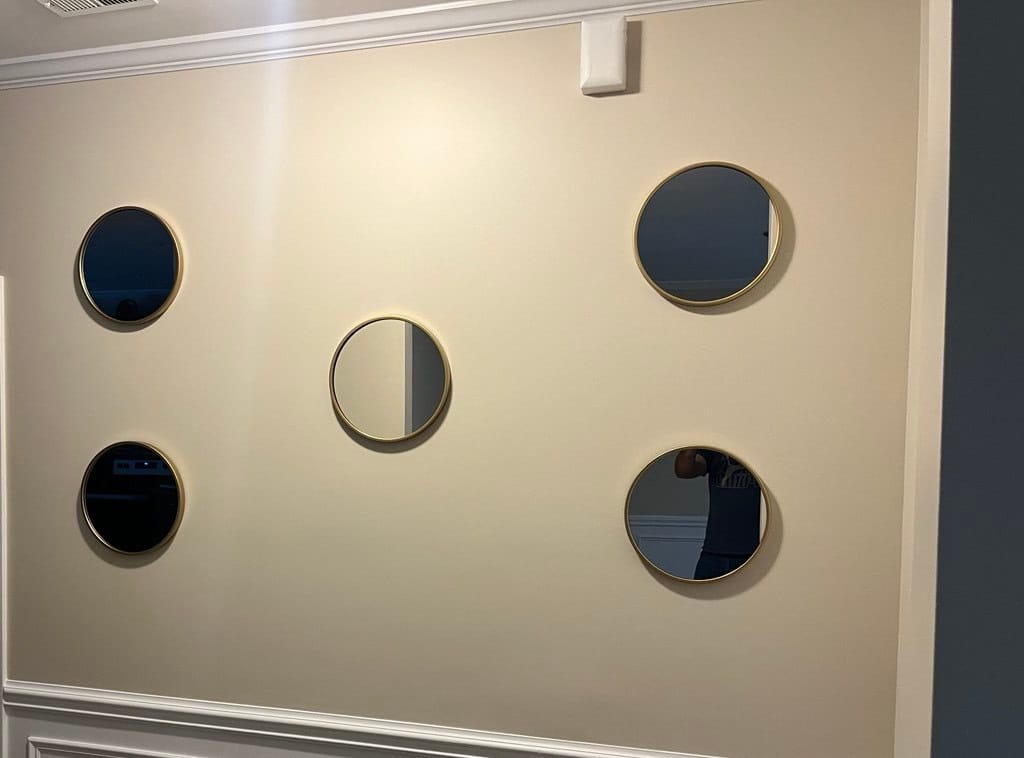
Mirror Installation Mistakes: 5 Costly Errors You’ll Want to Avoid
Hanging a Mirror? It’s Trickier Than You’d Think
You’d be surprised how many people assume hanging a mirror is just a matter of drilling a couple holes and calling it a day. Happens all the time. But the truth is, it’s one of those jobs that looks simple until you’re halfway through and wondering why the thing still isn’t straight—or why the adhesive isn’t holding.
A mirror isn’t just a reflective surface. It’s part of the room. It catches light, opens up tight spaces, and can either elevate your décor or throw it off completely. And when it’s not installed properly? You’ll notice. Every single day.
We’ve worked with folks all over Charlotte—homeowners, renters, property managers—who’ve tried to DIY their mirror installs. Some get lucky. Most end up frustrated. So if you’re thinking about tackling it yourself, here are five mistakes you’ll want to avoid.
1. Guessing the Measurements
This one’s easy to fall into. You hold the mirror up, eyeball the spot, maybe mark a couple dots with a pencil, and hope for the best. But mirrors aren’t forgiving. Even a half-inch off can make the whole thing look crooked, especially if it’s near a vanity or centered on a wall.
What actually works:
- Use a tape measure. Not your phone. Not your hand.
- Painter’s tape helps you visualize the placement before committing.
- A level—yes, even for small mirrors—makes a big difference.
If you’re mounting above furniture, measure from the top of that piece, not just the floor. It’ll look more intentional.
2. Using Whatever Adhesive or Screws You’ve Got Lying Around
We’ve seen mirrors mounted with wood glue, double-sided tape, and even Velcro. Not kidding. And while some of those might hold for a few days, they’re not built for the long haul—especially in humid rooms like bathrooms.
Better options:
- Mirror mastic (adhesive) works great for frameless mirrors on smooth walls.
- Mounting brackets are ideal for heavier or framed mirrors.
- Wall anchors and clips give extra support when studs aren’t available.
Always check the weight rating. If the packaging doesn’t say, don’t use it.
3. Ignoring What’s Behind the Wall
Drywall’s one thing. Brick, tile, plaster—those are a whole different ballgame. And if you’re not using the right fasteners for the wall type, you’re asking for trouble. We’ve seen anchors pull out, tiles crack, and plaster crumble just because someone used the wrong drill bit.
Before you start:
- Use a stud finder. It’s worth the $20.
- For tile or brick, grab masonry anchors and the right bit.
- For older homes with plaster, go slow and use anchors made for brittle surfaces.
Knowing what you’re drilling into changes everything.
4. Trying to Do It Alone
We get it. You’re handy. You’ve hung shelves, mounted TVs, maybe even built a deck. But mirrors—especially big ones—are awkward. They’re heavy, fragile, and hard to hold steady while you’re lining things up.
Our advice:
- Grab a second set of hands. Doesn’t have to be a pro—just someone who can help hold and level.
- Wear gloves. Not just for grip, but to avoid fingerprints and smudges.
- If it’s a large mirror, consider hiring someone. One slip and you’re dealing with broken glass and wall damage.
Even pros don’t do big installs solo.
5. Putting It in the Wrong Spot
You can hang a mirror perfectly—and still have it look off if the placement isn’t right. We’ve seen mirrors that reflect cluttered corners, blank walls, or even the toilet. Not ideal.
Think about:
- What the mirror will reflect. Natural light? Art? Open space? That’s what you want.
- Height. A good rule is about 60 inches from the floor to the center of the mirror.
- Furniture. If it’s going above a console or vanity, measure from that—not the floor.
Placement is about more than aesthetics. It affects how the room feels.
Doing It Yourself: What You’ll Need
Tools:
- Tape measure
- Stud finder
- Painter’s tape
- Level
- Drill with the right bits
- Mirror adhesive or brackets
- Anchors and clips
- Gloves
Steps:
- Tape out the mirror’s position.
- Find your studs and mark anchor points.
- Use the level to check alignment.
- Drill pilot holes.
- Apply adhesive or attach brackets.
- Lift and position the mirror.
- Check alignment again. Clean the surface.
A Few Extra Tips
Bathrooms:
Use moisture-resistant adhesive. Seal the edges if possible to prevent fogging and water damage.
Large Mirrors:
Don’t mess around. Use high-strength anchors or clips. And get help.
Frameless Mirrors:
- Laser level helps a ton.
- Apply adhesive in vertical lines—not blobs.
- Let it cure for at least 24–48 hours.
- If the wall isn’t flat, go with brackets.
Why Charlotte Pros Make It Easier
We’ve worked in homes all over the city—from historic bungalows in Plaza Midwood to new builds in Ballantyne. Every wall’s different. Every layout has its quirks. And when you’ve done this enough times, you start to see the patterns.
What you get with Busy Beaver Handyman Services:
- Clean installs with no guesswork
- Hardware that actually holds
- Advice on placement that fits your space
- A job done right the first time
Whether it’s a small bathroom mirror or a full-wall statement piece, we’ve got you covered.
📞 Need help?
Visit busybeaver.site or find us on Facebook
Quick Fixes for Common Mistakes
| Mistake | What Goes Wrong | What to Do Instead |
|---|---|---|
| Measuring without a level | Mirror ends up crooked | Use tape and a level before drilling |
| Wrong fasteners | Mirror falls or cracks | Use hardware rated for your wall type |
| Ignoring wall surface | Anchors pull out or tiles crack | Match fasteners to drywall, brick, or tile |
| Working solo | Misalignment or broken glass | Always have help for large mirrors |
| Poor placement | Mirror reflects clutter or blank wall | Position near windows or focal points |
FAQs
Can I hang a mirror on drywall?
Yes, but use heavy-duty anchors or find a stud. Adhesive works for frameless mirrors if applied properly.
Is adhesive better than brackets?
Depends. Adhesive looks cleaner but isn’t removable. Brackets offer more support and flexibility.
Should I hang a big mirror by myself?
Nope. One slip and you’re dealing with broken glass and wall damage. Always get help.
How much does it cost to hire someone in Charlotte?
Usually between $80 and $300 depending on size, wall type, and complexity.
What’s the most common mistake?
Rushing. People skip measurements, use the wrong tools, or ignore the wall type—and end up redoing the whole thing.
Final Thought
A mirror can make a room feel bigger, brighter, and more put together—but only if it’s hung right. Take your time. Measure carefully. Use the right tools. And if you’re not sure, call someone who’s done it before.
Busy Beaver Handyman Services has helped hundreds of Charlotte residents get their mirrors up safely and securely. We’d be happy to help you too.
Let me know if you want this adapted for a blog, service page, or print piece. I can also add client quotes or neighborhood-specific touches to make it feel even more local and lived-in.
Add a Comment